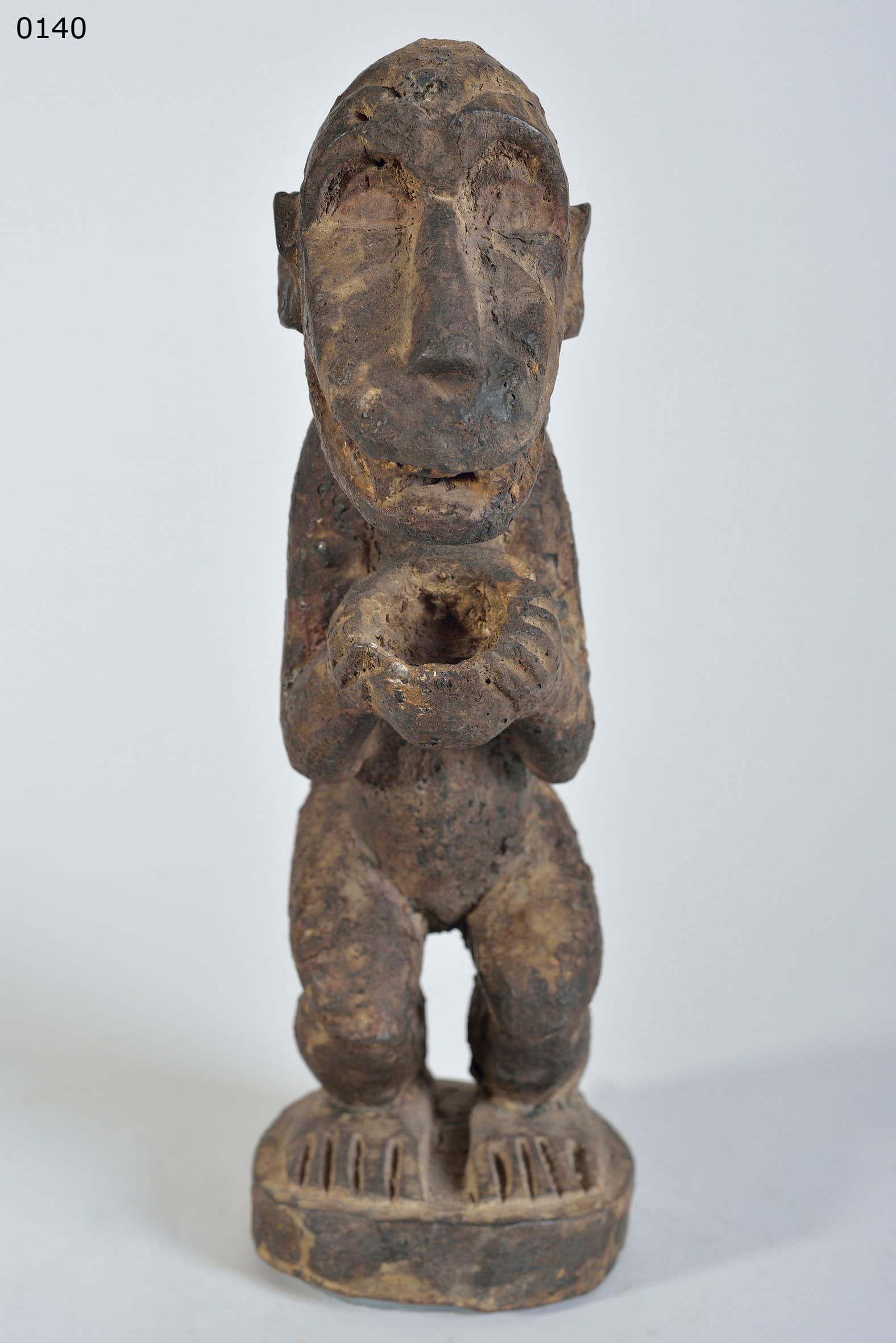
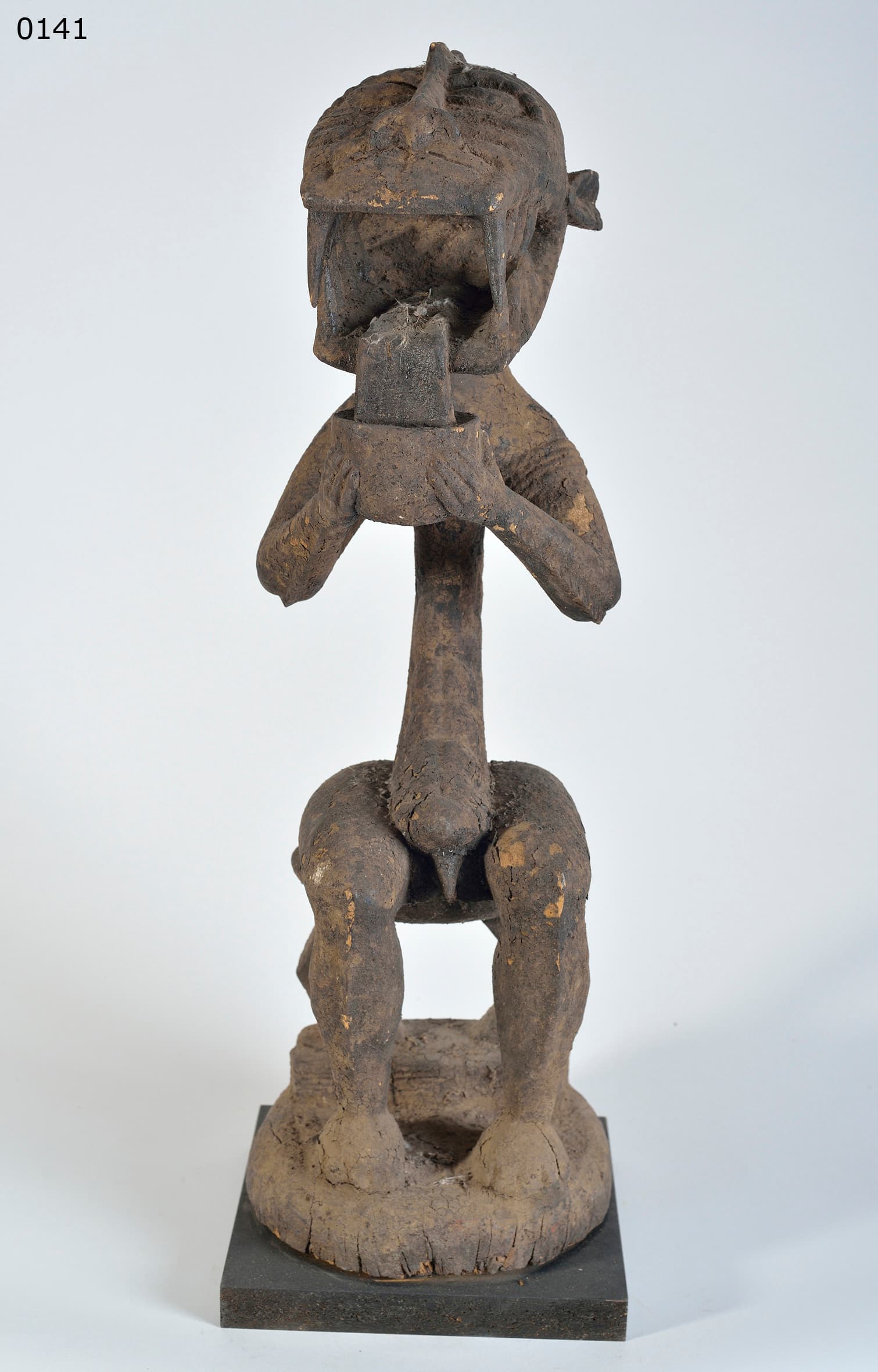
Dieses geschnitzte hölzerne Orakelgefäß zeigt eine sitzende anthropomorphe Figur, die an eine zylindrische Kammer gefesselt ist und eine stark verkrustete, dunkle Opferpatina aufweist. Das längliche Gesicht der Figur, die kantige Frisur und die stilisierten geometrischen Ritzungen sind klassische Baule-Attribute.
1. Ästhetischer Stil und regionale Charakteristika
Die Integration einer fein geschnitzten, heiteren Baule-Figur - die einen Naturgeist (asie usu) darstellt - mit einem funktionalen Weissagungsgefäß weist auf die ausgeprägte Schnitzkunst der Baule in der Gebrauchskunst hin. Die starre Haltung und der feierliche Ausdruck der Figur bilden einen Kontrast zu der rauen, verkrusteten Oberfläche der Wahrsagekammer. Diese Gegenüberstellung des raffinierten, klassischen Baule-Skulpturenkanons mit dem absichtlich unberührten, geschwärzten Körper der Kammer ist selbst eine Signatur des Gbekre-Apparats, bei dem die formale Schönheit der chaotischen Unmittelbarkeit des Opferrituals dient, anstatt mit ihr zu konkurrieren.
2. Rituelle Funktion und Wahrsagepraxis
Dieses als "Mausefallenorakel" oder Gbekre bekannte Gefäß wurde von Wahrsagern zur Kommunikation mit Geistern verwendet. Eine lebende Feldmaus wurde in die untere Kammer gelegt, und ihre Bewegungen über Stäbe oder verstreute Gegenstände wurden vom Wahrsager interpretiert, um Fragen zu beantworten oder die Zukunft vorherzusagen. Die beigefügte Figur dient dazu, die notwendigen spirituellen Kräfte anzuziehen, um eine genaue Ablesung zu gewährleisten, indem sie die Weisheit des Buschgeistes in die zufälligen Bewegungen des gefangenen Nagers kanalisiert - was vom Rutengänger als direkte Kommunikation mit der asie usu-Welt interpretiert wird, die parallel zur menschlichen Existenz liegt.
3. Physische Patina und Altersnachweis
Die dicke, geschwärzte und geronnene Patina sowohl auf der Figur als auch auf der Kammer ist das Ergebnis wiederholter Opfergaben, die wahrscheinlich Blut, Palmöl und Eigelb enthalten. Diese absichtliche Anhäufung von organischem Material ist ein physischer Ausdruck des aktiven rituellen Lebens des Objekts und ist vereinbar mit einer Herkunft aus dem frühen 20. Jahrhundert. Die steinharte Konsistenz der Verkrustung deutet auf jahrzehntelange zyklische Trankopfer hin, wobei jede Schicht verkohlt und sich mit dem darunter liegenden Holz auf eine Weise verbindet, die für einen langjährigen rituellen Gebrauch spricht.
Zusammenfassung
Dieses Stück ist ein charakteristisches Beispiel für einen Wahrsageapparat der Baule Gbekre. Es zeigt ein ausgewogenes Verhältnis zwischen feiner anthropomorpher Schnitzerei und intensiver ritueller Verkrustung. Das Objekt veranschaulicht die komplexe Überschneidung von Kunsthandwerk und ritueller Praxis in der Elfenbeinküste.
KI-unterstützt erstellt aus Sammlungsgutachten, Objektfotografie und eigener Recherche, redaktionell geprüft. Fehler sind möglich — Hinweise darauf sind uns willkommen. Zum Verfahren →